

Written by the team at Timber Creek Distillery in Crestview, Florida. Last updated: April 2026.
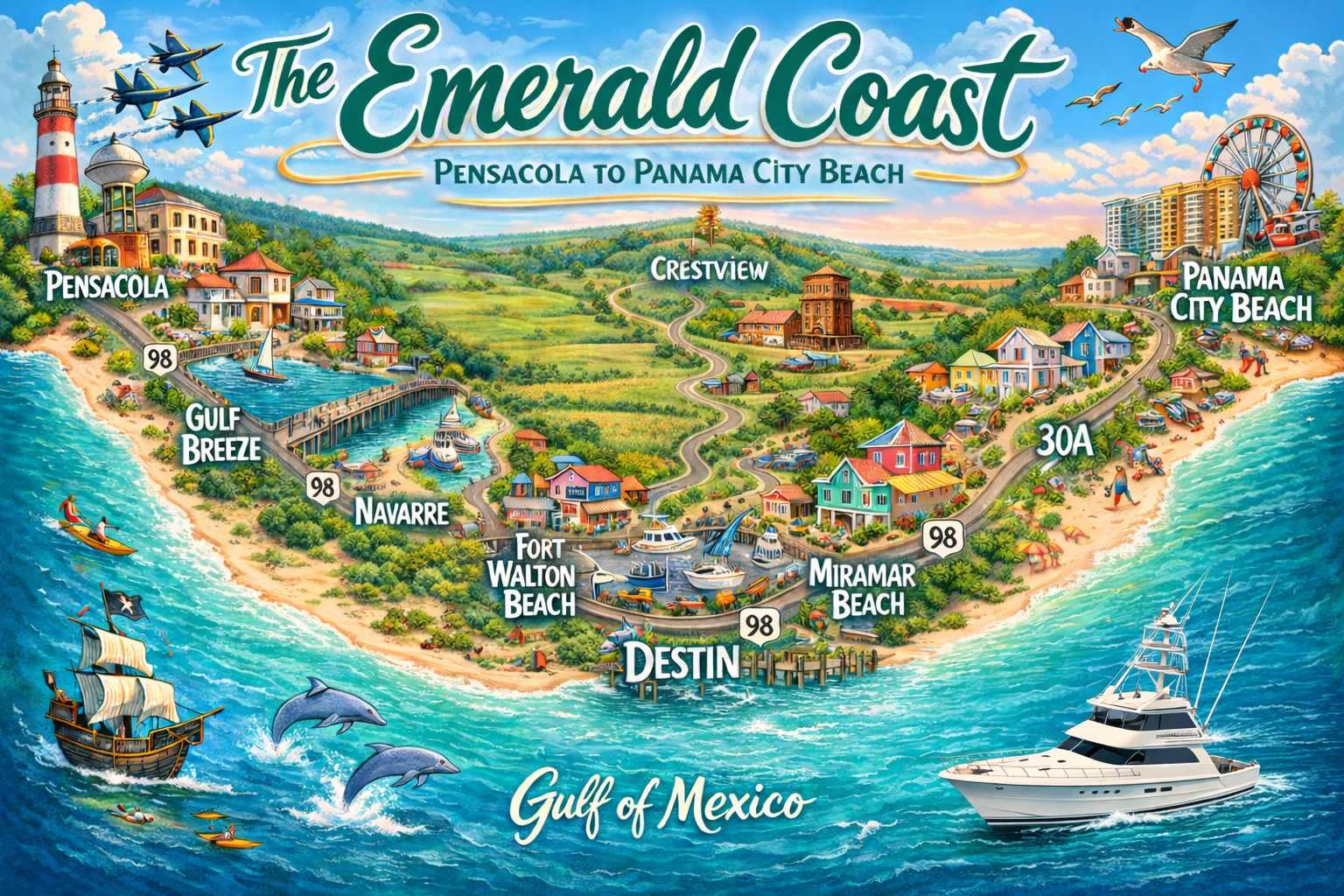
Florida’s Emerald Coast runs roughly 100 miles along the Gulf of Mexico in the western Florida Panhandle, from Pensacola in the west to Panama City Beach in the east. The region includes 11 distinct destinations: Pensacola, Pensacola Beach, Gulf Breeze, Navarre, Fort Walton Beach, Niceville, Crestview, Destin, Miramar Beach, Scenic Highway 30A, and Panama City Beach. The name comes from the bright emerald-green water along the coast, caused by sunlight reflecting through fine quartz-white sand.
Quick Facts About Florida’s Emerald Coast
- Region: Florida Panhandle / Northwest Florida
- Length: Approximately 100 miles of Gulf shoreline
- Destinations: 11 main cities and communities
- Counties covered: Escambia, Santa Rosa, Okaloosa, Walton, Bay
- Trademark: “Emerald Coast” was registered in 1983 by the Beaches of South Walton tourist council
- Major airports: Pensacola International (PNS), Destin–Fort Walton Beach (VPS), Northwest Florida Beaches International (ECP)
- Anchor cities: Pensacola (west), Destin (central), Panama City Beach (east)
- Inland hub: Crestview, home to Timber Creek Distillery
What Makes the Emerald Coast Different
The Emerald Coast is not just one beach town. It is a long stretch of coastal 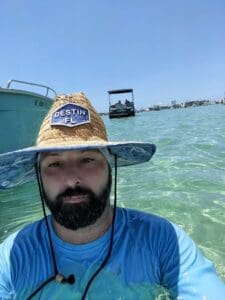 communities, waterfront cities, quieter inland stops, and scenic drives. Together, they create one of the most varied vacation regions in the South. Some visitors come for sugar-white sand and clear Gulf water. Others come for harbor restaurants, fishing trips, local breweries, shopping districts, family attractions, and smaller towns that feel more grounded than heavily resort-driven areas.
That variety is what makes the region work so well as a travel destination. Visitors can stay in one place and still explore several others without turning the trip into a major road expedition. Pensacola brings history and a real downtown. Pensacola Beach offers open water and island scenery. Navarre slows everything down. Destin is energetic and packed with activity. Scenic Highway 30A has its own polished beach-town rhythm. Meanwhile, inland places like Crestview add a different side of the region.
For travelers looking to mix beach towns with something more distinctive inland, Timber Creek Distillery gives the broader Emerald Coast trip a memorable stop away from the shoreline.
Quick Guide to Emerald Coast Cities
If you want the fastest way to understand the region, start here. These city guides break the Emerald Coast into easy stops and make it easier to compare the feel of each destination before planning the rest of the trip.
- Pensacola — historic downtown, museums, waterfront views, local restaurants, and one of the strongest cultural hubs in the western Panhandle.
- Pensacola Beach — open Gulf shoreline, island scenery, beach bars, boardwalk energy, and classic Florida beach atmosphere.
- Gulf Breeze — quieter waterfront areas, easy coastal access, local restaurants, parks, and a more relaxed pace between Pensacola and the beach.
- Navarre — laid-back beaches, fewer crowds, family-friendly shoreline, and one of the calmer stretches of the Emerald Coast.
- Fort Walton Beach — waterfront parks, museums, local flavor, and a strong community feel near both the bay and the Gulf.
- Niceville — bayfront charm, casual local spots, breweries, and a quieter alternative to the heavier tourist zones.
- Crestview — inland access, farm-country atmosphere, and unique regional experiences including Timber Creek Distillery.
- Destin — harbor activity, charter fishing, family attractions, restaurants, and one of the best-known vacation bases on the coast.
- Miramar Beach — resorts, beach access, shopping, dining, and an easy transition between Destin and 30A.
- 30A — scenic beach communities, upscale pockets, boutique shopping, local food, and some of the most recognizable coastal neighborhoods in the Panhandle.
- Panama City Beach — long beaches, major attractions, family activity, and the eastern anchor of many Emerald Coast vacations.
Why a Multi-Stop Trip Works Best
For most visitors, the beach towns will drive the trip. However, the broader regional mix is part of what makes the Emerald Coast stronger than a single-destination vacation. Visitors are not limited to one shoreline and one restaurant district. They can move around and build a much better itinerary.
Distances Between Emerald Coast Destinations
The Emerald Coast is one of the easier coastal regions to explore from a single base because the towns sit close together. Most major destinations are within an hour’s drive of each other.
| Route | Distance | Drive Time |
|---|---|---|
| Pensacola → Pensacola Beach | 10 miles | 20 min |
| Pensacola → Navarre | 25 miles | 35 min |
| Pensacola → Fort Walton Beach | 40 miles | 50 min |
| Pensacola → Crestview | 50 miles | 1 hr |
| Pensacola → Destin | 52 miles | 1 hr |
| Pensacola → Panama City Beach | 98 miles | 1 hr 50 min |
| Destin → Fort Walton Beach | 10 miles | 20 min |
| Destin → Miramar Beach | 5 miles | 15 min |
| Destin → Niceville | 12 miles | 20 min |
| Destin → 30A (Seaside) | 17 miles | 30 min |
| Destin → Crestview | 27 miles | 40 min |
| Destin → Panama City Beach | 50 miles | 1 hr |
| Crestview → Niceville | 22 miles | 30 min |
| 30A → Panama City Beach | 25 miles | 40 min |
Plan a Stop at Timber Creek Distillery
Many travelers exploring Florida’s Emerald Coast also make time for Timber Creek Distillery in Crestview. It is the only working grain-to-glass distillery on the Emerald Coast and is home to the world’s only bourbon blending experience. The distillery sits on a working family farm just inland from the coast and offers guided tastings and hands-on experiences year-round.
Visitors can explore tastings and experiences, learn more about Timber Creek Distillery, or browse the current Timber Creek spirits before planning a visit.
Emerald Coast Towns from West to East
Pensacola
Pensacola feels older, more grounded, and more layered than many beach-oriented destinations in the Panhandle. It has a real downtown, real neighborhoods, and enough history to stay interesting even before the water enters the conversation. Some beach towns start feeling interchangeable after a while. Pensacola does not.
The city works well for travelers who want more than pure beach time. Visitors can spend part of the day walking historic streets, checking out museums, or stopping in local restaurants, then still stay within easy reach of the shoreline. The full guide to things to do in Pensacola goes deeper into the city’s stronger stops.
Pensacola Beach
Pensacola Beach shifts the experience from city to island. The setting is brighter, more open, and more obviously built around shoreline views. This is where many visitors go when they want that classic Gulf backdrop without overcomplicating the plan.
Even so, it is not just a sand-and-water destination. The boardwalk area, the local food scene, and the overall pace make the area easy to enjoy even when visitors are not sitting in a beach chair all day. The full guide to Pensacola Beach things to do breaks down the best ways to spend time there.
Gulf Breeze
Gulf Breeze often gets overshadowed by its neighbors, which is part of why it remains appealing. It sits in a useful position between Pensacola and Pensacola Beach, and it works well for travelers who want access without constant resort noise.
The atmosphere here is calmer. Visitors get waterfront access, parks, restaurants, and a more residential feel. That can be a real advantage for travelers who want a base that feels lived-in rather than built entirely around tourism. The detailed guide to Gulf Breeze local attractions is worth reading for anyone looking for that quieter side of the region.
Navarre
Navarre is one of the easiest places on the Emerald Coast to recommend to someone who wants fewer crowds. It still offers beautiful water and beach access. However, the mood is more relaxed, less built up, and noticeably slower than some of the larger names nearby.
That makes Navarre a strong option for families, laid-back beach travelers, and people who do not need a heavy nightlife scene to feel like they are on vacation. The complete guide to things to do in Navarre, Florida gives a fuller picture of why the area continues to stand out.
Fort Walton Beach
Fort Walton Beach sits in an interesting middle ground. It has access to the water and tourism traffic, yet it still feels like a real community rather than a place built only for visitors. That gives it more depth than some travelers expect at first glance.
Waterfront parks, museums, and local restaurants help round out the experience. It is also a useful launch point for nearby beach areas without requiring visitors to stay in the middle of the busiest resort zones. For a closer look, visit the full guide to what to experience in Fort Walton Beach.
Niceville
Niceville is one of the more underrated stops in the broader Destin area. It sits on the bay side rather than the main Gulf strip, and that changes the feel immediately. The town is calmer, more local, and less chaotic than many first-time visitors expect from this part of Florida.
That does not make it boring. It makes it useful. Niceville works well for people who want restaurants, breweries, parks, and access to the region without constant traffic and heavy tourist turnover. The guide to what to do in Niceville is a good next step for travelers who want that style of trip.
Crestview
Crestview changes the conversation because it is not a beach town. Instead, it gives the Emerald Coast region some breathing room. Visitors looking for something beyond the shoreline can explore Crestview experiences and plan a stop at Timber Creek Distillery, one of the area’s most distinctive inland destinations.
For travelers who want something memorable beyond sand and condos, the distillery adds a true destination experience. Tours, tastings, and bourbon blending make it one of the more distinctive stops connected to the coast. Visitors can also browse current tastings and experiences before building the rest of the trip.
Destin
Destin is one of the defining anchors of the Emerald Coast and is widely known as the World’s Luckiest Fishing Village. That nickname came from the city’s long charter fishing history and its direct relationship to the Gulf. Even now, fishing remains one of the clearest reasons people build trips around Destin. The harbor still serves as one of the most active launching points for deep sea fishing charters in the region.
Still, Destin works best when visitors see it as more than just beach frontage. The harbor district, fishing culture, food scene, and surrounding activity give the city more substance than a quick scenic drive suggests. The full guide to the best experiences in Destin, Florida helps break that down more clearly.
Miramar Beach
Miramar Beach often functions as a transition point between Destin and 30A, but it is more than a connector. The area blends beach access, resort-style stays, shopping zones, and dining into a part of the coast that works well for a broad range of travelers.
It can be especially useful for visitors who want a comfortable base with easy access in several directions. Travelers can stay there and move west toward Destin or east toward 30A without much effort. The full guide to where to go in Miramar Beach covers the area in more detail.
30A
Scenic Highway 30A is less a single town than a string of beach communities with distinct identities. That is part of its appeal. Rather than getting one uniform destination, visitors get a series of neighborhoods and town centers that each feel a little different from the last.
Some travelers come for the upscale look and polished atmosphere. Others come for the local food, beach-town architecture, and the sense that the area has its own rhythm apart from the larger nearby vacation centers. The full guide to 30A Florida activities gives a better sense of how to navigate it.
Panama City Beach
Panama City Beach closes out the eastern end of this Emerald Coast run with long beaches, major visitor traffic, and a more overtly vacation-driven feel. For some travelers, that energy is exactly the point. There is a lot going on, and the area rarely feels sleepy.
Even so, the best version of Panama City Beach is not just crowds and condos. There are real attractions, worthwhile stops, and enough coastal scenery to justify spending time beyond the obvious beachfront strip. The guide to must-see attractions in Panama City Beach helps separate the stronger stops from the generic ones.
Why Visit the Emerald Coast
The Emerald Coast is easy to sell because the visuals are obvious. Bright white sand and clear Gulf water do a lot of the work. However, the stronger reason the region works so well is variety. Visitors can shift from a historic city to an island beach, then move into a quieter family-friendly shoreline. From there, they can spend a day in a harbor town and finish with scenic communities farther east.
The beaches themselves remain the centerpiece of the trip. While some towns get more attention than others, beautiful Gulf shoreline runs through the broader region and gives travelers more than one place to enjoy that signature white-sand, emerald-water look.
That variety keeps trips from flattening out. Many coastal vacations start looking the same by day three. The Emerald Coast gives visitors more options than that. They can break up beach time with food stops, shopping districts, local attractions, inland drives, and destination experiences that add a different kind of memory to the trip.
It also helps that the towns connect fairly well. Visitors do not have to treat each stop as a separate vacation. Instead, they can build one trip around several places and let each area do what it does best.
Where Should I Stay on the Emerald Coast?
The right base depends entirely on the kind of trip you want. The Emerald Coast covers enough variety that two travelers staying 50 miles apart can have completely different vacations. Here is how locals typically match a base to a trip type:
- First-time visitors: Destin or 30A. Both deliver the classic Emerald Coast experience with strong food, easy beach access, and a wide range of accommodations.
- Families: Navarre, Miramar Beach, or Fort Walton Beach. Calmer beaches, family-friendly resorts, and easier logistics with kids.
- Couples and adults: 30A communities like Rosemary Beach or Alys Beach for a slower, more polished feel. Central Destin for harbor dining and nightlife.
- Fishing trips: Destin. The harbor remains the most active charter base in the region.
- History and culture: Pensacola. The city’s Spanish colonial roots and the National Naval Aviation Museum give it more depth than other coastal stops.
- Travelers who want fewer crowds: Navarre, Gulf Breeze, or Niceville. All offer a slower pace and fewer tourists than the major resort zones.
- A non-beach base: Crestview. Centrally located inland, close to all major coastal destinations, and home to Timber Creek Distillery.
- Budget travelers: Fort Walton Beach, Niceville, or Crestview. Lower accommodation prices than Destin or 30A while staying within easy reach of beaches.
When Is the Best Time to Visit the Emerald Coast?
Each season on the Emerald Coast offers a different kind of trip. Spring and fall tend to balance weather and crowds best, while summer remains the busiest and winter remains the quietest.
Spring (March–May)
Warm days, cool evenings, and manageable crowds outside the busiest spring break weeks. Spring offers one of the best windows for coastal exploring without peak summer prices. Gulf water starts to warm up by late April.
Summer (June–August)
The peak vacation window. Gulf water hits its warmest, beach towns fill up, and prices climb. Afternoon thunderstorms are common. Hurricane season starts in June, but most major activity falls later.
Fall (September–November)
The locals’ favorite season. Crowds thin out after Labor Day, the water stays warm well into October, and accommodations get easier to book. Late August through September is the peak of hurricane season — worth watching, but not a reason to avoid the region.
Winter (December–February)
The slow season. Days stay mild, beaches are nearly empty, and prices drop sharply. The Gulf is too cold for swimming for most visitors, but it is an excellent window for inland trips, historic Pensacola, and distillery visits at Timber Creek.
How Many Days Do I Need on the Emerald Coast?
Most travelers plan for 4 to 7 days. A 3-day trip works for one base city like Destin or 30A. A 5- to 7-day trip allows time to combine a beach base with day trips to Pensacola, Crestview, or inland Alabama towns. Repeat visitors and longer-stay travelers often spend 10 to 14 days moving between two or three bases along the corridor.
Popular Activities on the Emerald Coast
Travelers visit the Emerald Coast for far more than just the beach. The region offers outdoor adventures, fishing charters, scenic drives, waterfront restaurants, and family attractions spread across several coastal communities.
- Deep sea fishing charters departing from Destin Harbor
- Dolphin cruises along the Gulf Coast
- Exploring Scenic Highway 30A communities
- Historic downtown districts in Pensacola
- Craft breweries and waterfront restaurants
- Distillery tours and bourbon blending experiences
- Family attractions and wildlife encounters
- Harbor dining and sunset waterfront views
Because the Emerald Coast communities sit relatively close together, visitors can easily experience several of these activities during a single trip.
Fishing on the Emerald Coast
Fishing is one of the defining experiences of the Emerald Coast, especially around Destin. The city’s identity as the World’s Luckiest Fishing Village is not just marketing language. Charter fishing remains one of the most recognizable activities in the region, and many visitors plan at least part of their trip around a day on the water. Even travelers who do not book a charter still feel that fishing culture in the harbor atmosphere, the boat traffic, and the seafood-driven identity of the coast.
Unique Experiences Beyond the Beach
Beach time may define the Emerald Coast, but some of the most memorable stops happen away from the shoreline. The clearest example is Timber Creek Distillery in Crestview — the only working grain-to-glass distillery on the Emerald Coast and the home of the world’s only bourbon blending experience.
Guests can book distillery tastings and experiences, explore the handcrafted spirits lineup, or learn more about private events at Timber Creek for groups, celebrations, and special occasions.
Travelers who want to understand the production side more clearly can also read the guide on how distillation works and the in-depth article on what whiskey is. Those articles add context for visitors interested in seeing the process up close while planning a stop at the distillery.
Stops like this work especially well when paired with nearby coastal destinations. Travelers staying in Niceville, Fort Walton Beach, or Miramar Beach can easily reach Crestview for a half-day excursion before heading back toward the Gulf for sunset.
Breweries on the Emerald Coast
The Emerald Coast has quietly developed a growing craft beer scene that stretches from Pensacola to Panama City Beach. Visitors exploring the region will find breweries and taprooms that add another dimension to the local food culture beyond waterfront restaurants and beach bars. As the regional beer scene continues to expand, breweries have become another enjoyable stop for travelers moving between towns along the Emerald Coast.
Family Attractions on the Emerald Coast
The Emerald Coast also offers a wide range of family-friendly attractions beyond the beach. Visitors traveling with kids will find wildlife encounters, aquariums, amusement-style parks, and interactive attractions throughout the region. Popular stops include the Emerald Coast Zoo and Timber Creek Distillery guide, along with other attractions spread across Destin, Fort Walton Beach, and Panama City Beach that help families break up beach time during a longer vacation.
Which Airport Should I Fly Into for the Emerald Coast?
Three airports serve the Emerald Coast region, which makes planning a Florida Panhandle trip easier than many first-time visitors expect. The right airport depends mostly on which part of the region visitors want to use as their base.
Pensacola International Airport (PNS)
Pensacola International Airport provides convenient access to Pensacola, Pensacola Beach, Gulf Breeze, and Navarre. It works especially well for travelers exploring the western side of the Emerald Coast.
Destin–Fort Walton Beach Airport (VPS)
Destin–Fort Walton Beach Airport sits near Fort Walton Beach and offers direct access to Destin, Niceville, Crestview, and surrounding communities. For most visitors staying in the central part of the Emerald Coast, this is the most practical airport.
Northwest Florida Beaches International Airport (ECP)
Northwest Florida Beaches International Airport primarily serves Panama City Beach and the eastern Emerald Coast, including Scenic Highway 30A. It is often the best fit for travelers focusing on that side of the region.
Planning an Emerald Coast Trip
The Emerald Coast works best when planned as a connected corridor of destinations rather than a single town. Visitors typically choose a base location and explore neighboring communities through short drives. That approach makes it easier to enjoy more than one version of the coast without constantly changing hotels.
For example, a Destin stay can easily branch into Niceville, Fort Walton Beach, Miramar Beach, and Scenic Highway 30A. A Pensacola stay opens access to Pensacola Beach, Gulf Breeze, and Navarre. Inland stops like Crestview can add a completely different type of experience to a beach-focused trip.
Food also plays a major role in how many travelers shape their time here. Harbor dining in Destin, local restaurants in Pensacola, breweries across the region, and stops like Timber Creek Distillery all make it easier to build a trip around more than just beach access.
Nearby Day Trips Beyond the Core Coast
Travelers who want to expand an Emerald Coast trip without completely shifting the feel of the vacation have several strong options beyond the main beach corridor. That is one of the advantages of this region. Visitors can stay focused on the Gulf Coast while still adding a few inland or neighboring-town stops that bring different scenery, food culture, and local character to the itinerary.
Alabama Day Trips
For example, Fairhope offers one of the most polished small-town atmospheres within reach of the Florida Panhandle. The downtown is walkable, the food scene is stronger than many first-time visitors expect, and the overall setting feels more refined and arts-oriented than a typical beach overflow town. For travelers coming from the western side of the coast, especially those exploring Pensacola, Pensacola Beach, or Gulf Breeze, Fairhope is a strong day-trip option. It offers a change of pace that still fits naturally into a broader Gulf Coast vacation.
Farther inland, Enterprise and Dothan add another layer of regional character for travelers who want to see more than sand, condos, and waterfront restaurant districts. These communities give visitors a better sense of the inland South that supports and surrounds the coast. They are useful additions for travelers staying near Crestview. They also help travelers who want to balance beach time with a drive through a more grounded, less tourism-shaped side of the region. Just over the state line, Andalusia is often the first Alabama town visitors encounter and works well as a quick first stop on a day trip.
Inland Florida Day Trips
There are also smaller inland options that can work well without turning the day into a long road commitment. DeFuniak Springs offers a more traditional small-town setting with local character. Baker shows a quieter, more rural side of the Panhandle that many beach visitors never take the time to see. For travelers based in Destin, Niceville, or Fort Walton Beach, those inland stops can help round out the trip and keep the overall itinerary from feeling too repetitive.
The point is not to leave the Emerald Coast behind. It is to use the coast as a base and then branch outward into nearby places that deepen the trip. That approach works especially well for longer vacations, repeat visitors, and travelers who want more than the usual beach-hotel-restaurant cycle. When planned well, these nearby day trips make the Emerald Coast feel less like a single shoreline and more like a broader regional destination.
The Emerald Coast as a Vacation Region
The best way to understand the Emerald Coast is not as one destination with a few nearby beach towns. It works better as a connected vacation region made up of very different communities that each contribute something distinct. That broader structure is what gives the area its strength. Visitors are not limited to one boardwalk, one harbor, or one strip of sand. Instead, they can move through a corridor of places that each offer a different version of the Gulf Coast experience.
Western Towns: Pensacola to Navarre
On the western side, Pensacola adds history, a real downtown, museums, and a stronger urban identity than many people expect from the Panhandle. Just beyond it, Pensacola Beach shifts the experience toward open shoreline, island scenery, and a brighter, more beach-driven atmosphere. Gulf Breeze and Navarre slow things down. They offer calmer waterfront access, a more local pace, and a coastal day that feels less built around heavy visitor traffic.
Central Coast and Crestview
Moving east, Fort Walton Beach and Niceville provide another layer of variety. Fort Walton Beach sits close to both the bay and the Gulf. That makes it useful for travelers who want water access without committing fully to a resort-heavy setting. Niceville, meanwhile, offers a more local bayfront feel and works well for visitors who want restaurants, parks, breweries, and easier breathing room away from the busiest tourism zones.
Then there is Crestview, which changes the rhythm of the region by pulling the trip inland. That inland shift matters because it keeps the Emerald Coast from becoming one long string of similar beach stops. Crestview adds farm-country character, easier access to inland drives, and regional experiences that would feel out of place directly on the shoreline. It is also home to Timber Creek Distillery, the only working grain-to-glass distillery on the Emerald Coast. Visitors looking for something beyond the standard sand-and-condo vacation can explore distillery tours, tastings, and bourbon blending experiences. These add a completely different kind of stop to the trip. Travelers curious about the production side can also explore the working distillery itself and browse the current spirits lineup.
Destin, 30A, and the Eastern Coast
Farther east, Destin remains one of the defining anchors of the Emerald Coast. The harbor, charter fishing culture, restaurants, family attractions, and constant movement give the city a high-energy feel that contrasts with quieter parts of the coast. Nearby Miramar Beach works well as a comfortable transition between Destin and 30A. It offers beach access, resorts, shopping, and a flexible base for visitors who want to move in either direction.
Scenic Highway 30A adds yet another layer to the region. Rather than functioning as one uniform destination, it connects a chain of beach communities with distinct personalities. Travelers can move through places like Seaside, Seagrove Beach, Rosemary Beach, and Alys Beach, each of which contributes its own architectural style, food scene, and beach-town atmosphere. That variety is a major reason 30A feels different from Destin or Pensacola Beach, even though all of them belong to the same broader travel corridor.
At the eastern end, Panama City Beach closes out the region with longer beaches, larger-scale tourism infrastructure, and a more overtly vacation-driven energy. For some visitors, that is exactly the appeal. For others, it works best as one part of a larger trip that includes calmer and more locally rooted stops elsewhere along the coast.
Why the Variety Works
That mix is the real value of the Emerald Coast. Some places are better for history. Others are better for wide-open shoreline, harbor activity, local restaurants, or scenic neighborhood drives. Some travelers want the movement and visibility of Destin. Others want the quieter family feel of Navarre, the cultural depth of Pensacola, or the inland contrast of Crestview. Because all of those experiences sit within the same broader region, the coast never has to feel one-dimensional.
It also helps that the area supports several different styles of travel. A visitor can build the trip around beaches, food, fishing, family attractions, scenic driving, or destination stops like wildlife encounters and regional experiences in Crestview. Travelers interested in the broader local beverage scene can also branch into the brewery landscape across the Emerald Coast. That flexibility is one of the main reasons the region works so well for both first-time visitors and repeat travelers.
If you are planning a trip from scratch, this page should work as the starting point rather than the final stop. Begin with the big regional picture here. Then move into the detailed guides for Pensacola, Navarre, Destin, 30A, and Panama City Beach depending on the type of trip you want to build.
Keep Exploring the Emerald Coast
Travelers planning a broader Florida Panhandle trip can continue with destination guides for Pensacola, Pensacola Beach, Navarre, Destin, Miramar Beach, and Scenic Highway 30A.
Visitors who want to add a distinct inland stop to the trip can also explore things to do in Crestview, plan a visit to Timber Creek Distillery, review current tastings and experiences, and browse the full spirits collection.