


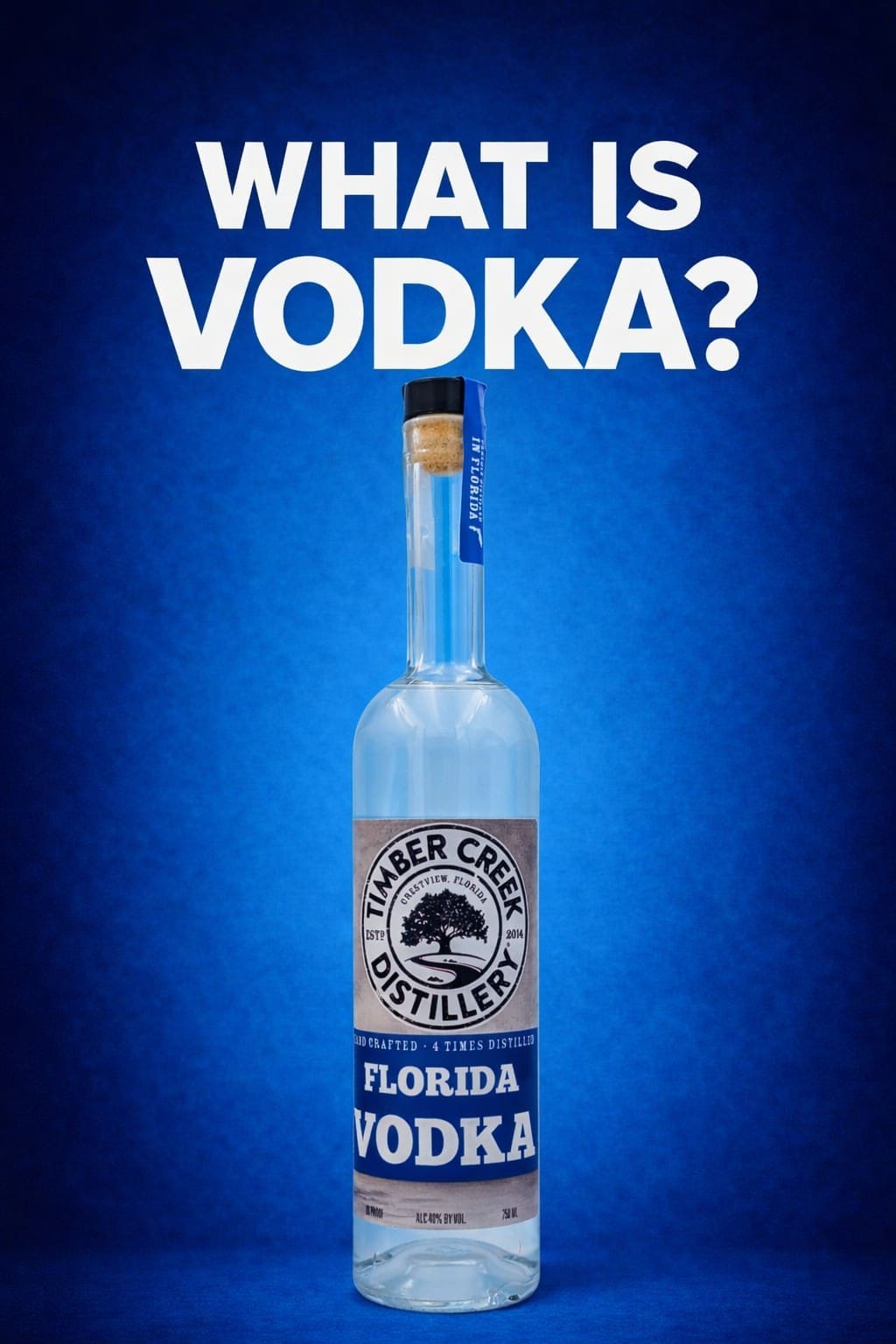
Vodka is a distilled spirit made from fermented agricultural material and bottled at a defined alcohol strength. In the United States, producers bottle vodka at not less than 40% alcohol by volume, or 80 proof.
Under U.S. law, vodka is defined as a neutral spirit distilled or treated so that it lacks distinctive character, aroma, taste, or color. That definition emphasizes refinement over expressive raw material character. Unlike bourbon, which must follow strict mash bill and barrel requirements outlined in our complete bourbon definition guide, vodka is defined primarily by neutrality.
However, neutrality does not mean the complete absence of structure. Instead, skilled distillers remove aggressive congeners while preserving clean ethanol and controlled texture. As a result, two vodkas may taste similar in intensity yet differ subtly in mouthfeel and finish.
Because federal regulation centers on outcome rather than ingredient, vodka may originate from grain, potatoes, sugar beets, grapes, or other agricultural products. Therefore, no single raw material defines the category.
2. Is Vodka Legally Defined in the United States?
In the United States, the Alcohol and Tobacco Tax and Trade Bureau (TTB) governs distilled spirits standards of identity under Title 27, Part 5 of the Code of Federal Regulations. These standards define vodka as a neutral spirit distilled or treated so that it lacks distinctive character, aroma, taste, or color.
Importantly, the regulation focuses on the finished product rather than prescribing specific equipment. Producers may use column stills, multiple distillations, charcoal filtration, or other treatment methods. However, the final spirit must remain free of defining aroma or flavor.
If you want a deeper understanding of how federal definitions compare across categories, our What Is Gin? botanical breakdown explains how gin differs by requiring juniper-forward character, while vodka requires the opposite—neutrality.
International standards vary slightly. For example, European Union regulations allow broad agricultural sourcing but may require disclosure when non-traditional bases are used. Even so, the core principle of neutrality remains central to vodka worldwide.
3. Where Vodka Fits in the Spirits Family
Vodka belongs to the broader distilled spirits category, meaning producers ferment sugars into alcohol and then concentrate that alcohol through distillation. Unlike whiskey, which preserves grain character and often matures in oak barrels as explained in our in-depth whiskey making guide, vodka minimizes those influences.
Technically, vodka sits near neutral spirits on the spectrum of rectified alcohol. However, not all neutral spirit qualifies as finished vodka. Producers must dilute, filter, and bottle the spirit according to category expectations.
Because vodka emphasizes refinement rather than aging, fermentation management and distillation precision matter more than barrel influence. This focus aligns closely with the grain-to-glass philosophy described in our grain-to-glass distillation process overview.
4. A Brief History of Vodka
Grain distillation developed across Eastern Europe during the late medieval period. As still design improved, alcohol purity increased, and regional spirits gradually moved toward a cleaner, more neutral style.
The nineteenth-century invention of the continuous column still marked a turning point. Column distillation allowed producers to reach higher proof levels and remove heavier congeners more efficiently than earlier pot still systems. This technological advancement ultimately shaped modern vodka production.
By the mid-twentieth century, global markets embraced vodka as a versatile mixing spirit. Marketing emphasized smoothness and adaptability rather than raw material identity, which helped vodka dominate cocktail culture in North America.
5. Ingredients: What Producers Use
5.1 Base Materials
Producers commonly use wheat, corn, rye, or potatoes. In the United States, corn often dominates due to agricultural availability and fermentation efficiency. However, grapes and sugar beets also qualify.
Although distillers aim for neutrality, base material still influences fermentation chemistry. For example, rye may introduce subtle spice structure before rectification, while wheat may produce a softer fermentation profile. Effective distillation removes overt flavor, but structural differences can remain.
At Timber Creek, our Florida Vodka production approach highlights how base grain selection and fermentation control influence texture even within a neutral category.
5.2 Water
Water functions both as a fermentation medium and as a proofing agent. After distillation, producers dilute high-proof spirit to bottling strength. Therefore, mineral balance and filtration directly affect mouthfeel and finish.
5.3 Yeast and Fermentation Control
Yeast converts sugars into ethanol while producing esters and higher alcohols. Because vodka requires neutrality, distillers control temperature carefully to minimize unwanted byproducts. Clean fermentation significantly reduces the need for aggressive correction later in the process.
6. Vodka Production: Step-by-Step
6.1 Milling and Conversion
Producers mill grains to expose starch, then cook the mash to gelatinize that starch and activate enzymes. These enzymes convert starch into fermentable sugars.
6.2 Fermentation
Next, yeast consumes sugars and produces alcohol. During this stage, distillers monitor temperature and nutrient levels closely to prevent sulfur formation and fusel alcohol buildup.
6.3 Distillation and Rectification
Most vodka producers rely on column stills with multiple plates. Each plate increases vapor-liquid interaction, raising alcohol purity and allowing heavier congeners to remain behind.
If you want a technical comparison between column and pot still systems, our complete explanation of how distillation works walks through vapor separation and rectification in detail.
6.4 Filtration
Many producers filter vodka through activated carbon to remove trace impurities and soften perceived burn. However, excessive filtration can strip subtle structural character.
6.5 Proofing and Resting
After filtration, producers dilute the spirit to final proof. Some allow the spirit to rest before bottling so that water and ethanol integrate fully, stabilizing mouthfeel.
7. Styles and Marketplace Variations
Plain vodka forms the core category. Flavored variations introduce citrus, vanilla, pepper, or fruit elements, but these products must follow federal formulation rules.
Unlike categories such as bourbon, which must meet strict aging standards, vodka labeling often includes marketing terms like “small batch” or “handcrafted.” Because those phrases lack precise legal definitions, consumers should evaluate transparency rather than branding language alone.
8. What Determines Vodka Quality?
Vodka quality depends primarily on fermentation cleanliness, rectification efficiency, water quality, and blending consistency.
Common flaws include solvent-like aromas, sulfur notes, and harsh burn. Most of these defects originate during fermentation or from imprecise cut management. Therefore, technical discipline matters more than claims about the number of distillations.
9. Flavor and Texture
Although vodka is defined by neutrality, subtle differences remain. Some expressions feel round and soft, while others feel crisp and dry. These distinctions result from trace congeners, proofing water composition, and filtration decisions.
Consequently, evaluating vodka requires attention to texture rather than bold flavor intensity.
10. Labeling and Proof Standards
In the United States, proof equals twice the alcohol by volume percentage. Therefore, 40% alcohol by volume equals 80 proof.
Claims such as “distilled five times” describe process repetition rather than guaranteed quality. Similarly, gluten-related labeling follows federal guidance recognizing that properly distilled spirits remove gluten proteins.
11. How Vodka Is Used
Consumers drink vodka neat, chilled, or in cocktails such as the Martini, Moscow Mule, Bloody Mary, and Cosmopolitan. Because vodka lacks dominant flavor, it supports other ingredients rather than overriding them.
For visitors wanting to taste vodka in a real production setting, our working distillery tours and tastings allow guests to experience grain-to-glass production firsthand.
12. Storage and Shelf Stability
Unopened vodka remains shelf stable indefinitely when stored away from heat and direct light. Once opened, oxidation progresses slowly due to high alcohol content. Freezer storage thickens texture but does not improve intrinsic quality.
13. Common Misunderstandings About Vodka
- All vodka tastes identical.
- More distillations always mean better quality.
- Only potatoes qualify as authentic base material.
- Charcoal filtration automatically guarantees superiority.
14. Buying Considerations
When selecting vodka, consumers should evaluate production transparency, base material disclosure, and intended use. Higher proof expressions may suit structured cocktails, while softer profiles may suit neat consumption.
15. Quick Reference Summary
- Vodka is legally defined in the U.S. as a neutral distilled spirit.
- Producers may use various agricultural bases.
- Neutrality remains the central regulatory requirement.
- Column distillation commonly achieves rectification.
- Filtration and proofing influence mouthfeel.
- Quality depends on fermentation and process control rather than marketing claims.