


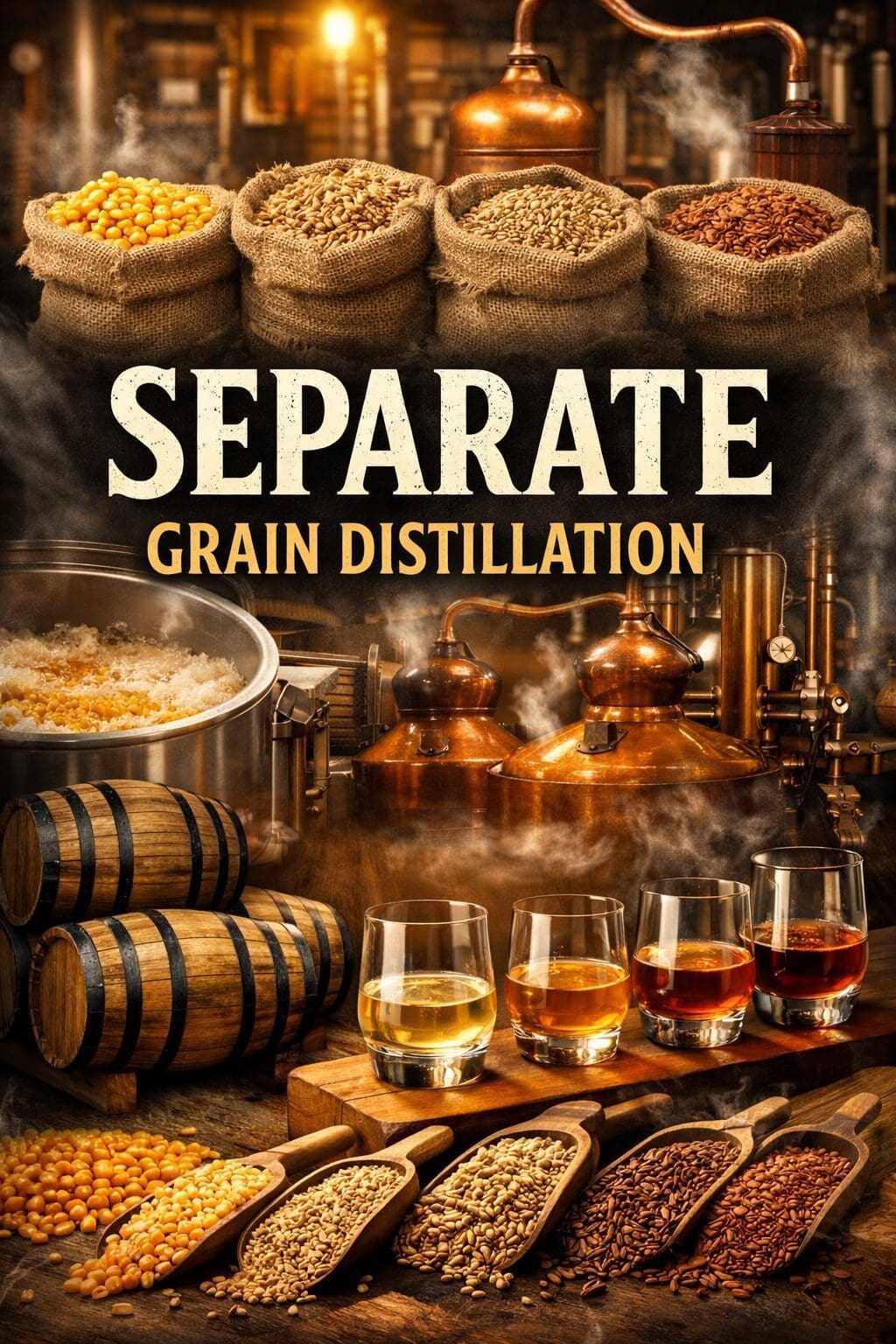
At Timber Creek Distillery, we practice separate grain distillation — meaning we cook, lauter, ferment, distill, and age each grain individually before blending. Instead of committing to a mash bill at the beginning of production, we build flavor at the end. This approach gives us unmatched flexibility, consistency, and control, particularly within our private label spirits program.
What Is Separate Grain Distillation?
In most American whiskey production, grains are milled and cooked together in a single mash. From that point forward, the identity of that whiskey is fixed. By contrast, our process isolates corn, wheat, rye, and barley from the very beginning.
Each grain moves independently through mashing, lautering, fermentation, distillation, and barrel aging. Only after maturation do we blend to taste. This system aligns directly with our grain-to-glass philosophy explained in How Distillation Works and our broader educational resources found in the Timber Creek blog.
Optimized Mashing and Gelatinization
Why Temperature Matters
Every grain has a different gelatinization temperature — the point at which starch becomes accessible for enzymatic conversion. Corn gelatinizes at a significantly higher temperature than wheat or barley. Rye presents viscosity challenges due to beta-glucans. When grains are mashed together, compromises must be made.
At Timber Creek, we eliminate compromise. Corn is cooked at the temperature required for full gelatinization. Wheat is handled more gently. Rye is managed to prevent excessive thickness. Barley is optimized for enzymatic efficiency.
This level of precision directly influences fermentation efficiency and flavor development, concepts explored further in our guide to Fermentation for Distilling.
Lautering and Clean Fermentation Control
Why We Lauter Each Grain
After mashing, we lauter each grain separately, removing solids before fermentation. While many distilleries ferment on-grain, we prefer to separate liquid wort from spent grain material to minimize unwanted tannin extraction and husk bitterness.
Clean fermentation allows us to track each grain’s performance independently — from sugar conversion to yeast health and aromatic development. Because each grain ferments on its own, we gain data clarity. Separate fermentation means separate variables, and separate variables mean control.
Flavor Development During Fermentation
Congeners form during fermentation. Corn produces sweetness and body. Wheat enhances softness and texture. Rye generates spice and aromatic brightness. Barley contributes malt complexity.
By isolating fermentation variables, we intentionally shape these characteristics before distillation even begins — reinforcing principles discussed in our cornerstone article on What Is Whiskey?.
Distilling Each Grain Individually
Precision in the Still
After fermentation, each wash is distilled independently. Cuts are made based on temperature differential and sensory evaluation. Heads, hearts, and tails are not theoretical divisions; they are flavor decisions.
Corn distillate transitions differently than rye. Wheat behaves differently than barley. Distilling them separately allows us to refine each grain’s character before it ever touches oak.
For readers interested in the physics behind this process, our breakdown of Pot Still vs. Column Still explains how still design influences flavor retention and control.
Separate Barrel Aging and Climate Impact
Aging as Independent Components
Each grain enters new charred American oak barrels independently. Rather than aging a pre-blended mash bill, we age components. This creates inventories of matured corn, wheat, rye, and barley whiskey.
Barrel aging involves extraction, oxidation, and concentration. Florida heat accelerates wood interaction. The impact of oak is detailed further in Barrel Aging Explained.
Four Aging Curves Instead of One
Corn may develop caramel and toasted marshmallow notes. Wheat often softens into pastry sweetness. Rye evolves into bold spice. Barley leans into malt richness.
Because we age separately, we observe four distinct maturation curves instead of one blended trajectory.
Blending to Taste Instead of Recipe
Reversing the Traditional Order
Traditional bourbon production fixes mash bill percentages before fermentation. Our approach reverses the order. We commit to ratios at the end, not the beginning.
When building a bourbon or custom expression, we blend aged single-grain stocks to achieve a precise sensory target. This approach mirrors the intentional flavor construction described in our educational piece on What Is Bourbon?.
Flavor Architecture in Practice
A softer profile may emphasize wheat and balanced corn. A bold, spicy expression may highlight rye. A structured, malt-forward blend may elevate barley.
We are not locked into fixed mash bill percentages. We sculpt flavor based on objective sensory evaluation and client goals.
What This Means for Our Private Label Program
Customization Without Sacrificing Consistency
Our Private Label Spirits Program benefits directly from separate grain distillation. Because we maintain aged inventories of each grain, we can recreate blends with precision.
Restaurants, resorts, and corporate partners receive a flavor profile designed specifically for them — and documented for repeatability.
Scalable Precision
Most distilleries blend batches of blended mash bills. We blend components. That distinction allows us to reproduce flavor profiles over time with remarkable accuracy.
This flexibility also supports the wide range of expressions available in our tasting room and on-site experiences.
Why Separate Grain Distillation Matters
Separate grain distillation requires more tanks, more barrels, more inventory management, and more discipline. However, it delivers something rare in American whiskey: total control over flavor architecture.
At Timber Creek Distillery, we preserve the voice of every grain — corn, wheat, rye, and barley — through independent production. Then we blend those voices intentionally.
Instead of asking what mash bill we committed to years ago, we ask what flavor we want to build today. That philosophy defines our identity as a grain-to-glass distillery near Crestview, Florida, and it drives the precision behind every bottle that carries the Timber Creek name.