
What Is Blended Whiskey? A Craft Distiller’s Guide
Blended whiskey mixes barrels or mash bills for a balanced flavor. Learn how blending works and what Timber Creek Distillery does differently.
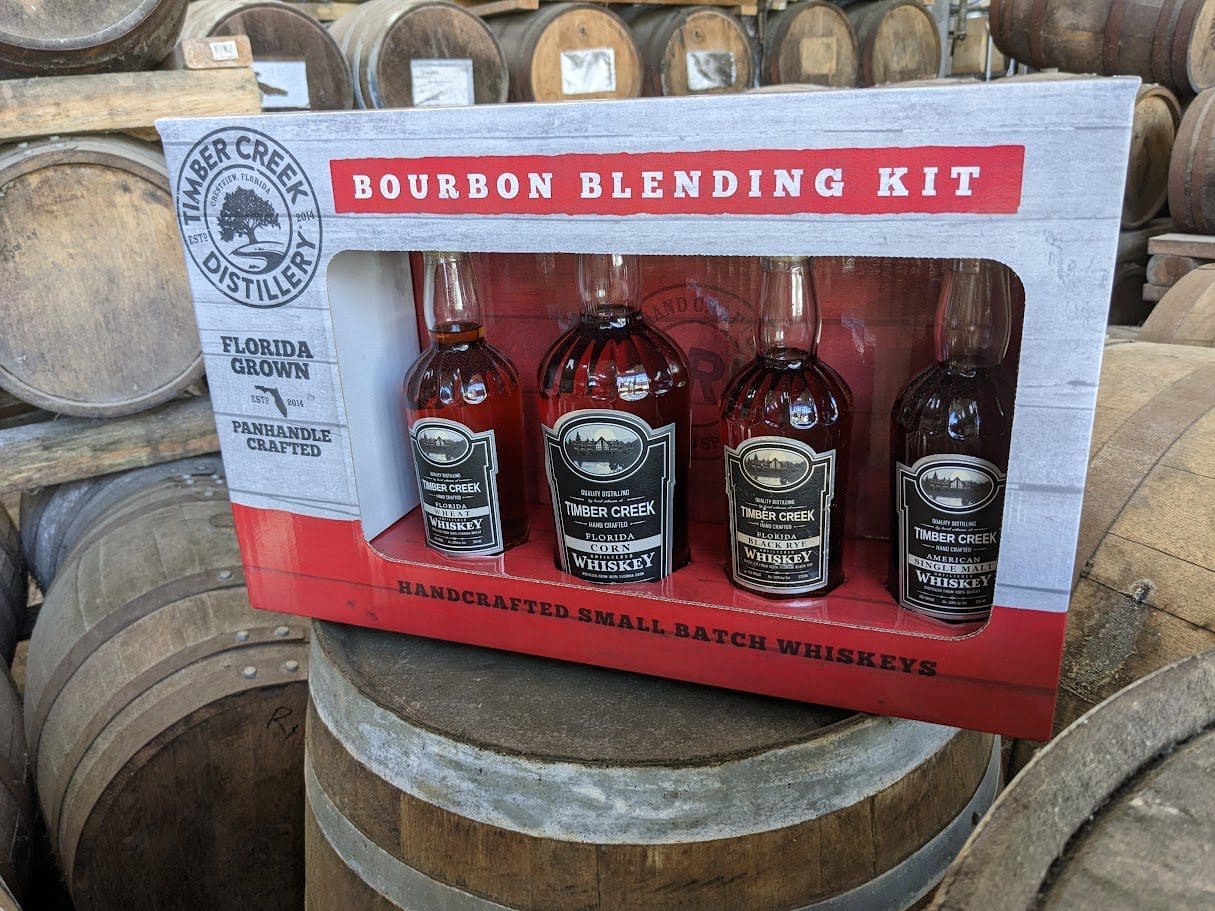
Blended whiskey combines two or more barrels, batches, or mash bills into one final product. Distillers blend it on purpose. No two barrels age exactly alike, so blending smooths out those differences and keeps the flavor consistent. In fact, blending sits at the center of how we build bourbon at Timber Creek Distillery. You can try it yourself with our Bourbon Blending Kit.
Quick Facts:
- What it is: blends multiple barrels, batches, or mash bills into one whiskey
- Why distillers do it: for consistency, balance, and layered flavor
- Not the same as: single barrel whiskey (no blending) or straight small batch (fewer, similar barrels)
- Where Timber Creek fits in: our PureBlend process and Bourbon Blending Kit let guests build their own blend on-site
What Makes a Whiskey “Blended”?
A whiskey earns the “blended” label the moment a distiller mixes spirit from more than one source. That source can be a second barrel, a different mash bill, or whiskey aged longer. It can even come from a different still run entirely. The goal is a specific taste, not one barrel’s personality. That makes blending a deliberate craft step, not an accident.
This differs from how many bourbons reach the shelf. Therefore, the difference matters if you’re comparing bottles or trying to figure out what you’re tasting.
Blended Whiskey vs. Single Barrel and Small Batch
Single barrel whiskey comes from exactly one barrel. Its flavor shifts from batch to batch, depending on where that barrel sat in the rickhouse. In contrast, small batch whiskey blends a limited number of similar barrels. Blended whiskey works differently. It can combine barrels, mash bills, or even different whiskey styles on purpose. Those contrasts build a rounder final flavor. Our single barrel vs. small batch guide breaks down how each approach changes what’s in your glass.
Mash bill plays a role here too. Grain recipes vary from barrel to barrel. So a distiller blending whiskey is often blending different mash bills too, not just different barrels. Our mash bill guide explains how grain ratios shape flavor before blending starts.
Why Distilleries Blend Whiskey
Consistency is the most practical reason to blend. A bar buying the same bottle every month expects the same flavor every time. Blending is how a distillery delivers that. Balance is the second reason. For example, one barrel might run hot and spicy. Another might run soft and sweet. Blending the two can produce something better than either barrel alone. Blending isn’t a shortcut, either. It’s an extra skill that builds on top of distilling and aging.
Master blenders spend real time with a glass and a notebook, just like distillers at the still. Small craft distilleries rely on blending especially. It helps a limited number of barrels taste like one coherent, repeatable brand.
How Timber Creek Blends Bourbon
Timber Creek Distillery built its own approach to this process. We call it PureBlend. Read the full story in our PureBlend announcement. In short, it’s our method for combining barrels with intention instead of guesswork. Every bottle reflects the flavor profile we’re aiming for.
We also let guests try blending firsthand. Our Bourbon Blending Experience walks visitors through sampling individual barrels and building a custom blend on-site. The Bourbon Blending Kit lets you do the same thing at home with pre-measured pours. Prefer to read about it first? Our post on home blending with the kit walks through what’s inside and how it works.
How to Taste and Evaluate a Blended Whiskey
Start with the nose before you sip. For instance, blended whiskeys often carry more complexity than a single barrel, and that complexity usually shows up in the aroma first. Next, taste it plain, without ice, so the actual blend comes through unmasked. A good blend aims for balance. Look for sweetness, spice, and oak showing up together, rather than one note taking over.
Finally, compare it side by side with a single barrel pour, if you have one on hand. That’s often the fastest way to feel what blending actually adds to a whiskey. It’s also why our Bourbon Blending Experience walks guests through barrel samples before they build their own blend.
Blended whiskey isn’t a lesser version of single barrel or small batch bourbon. It’s a different craft decision that aims for balance and consistency. Want to see that decision-making in action? Timber Creek’s Bourbon Blending Experience and Blending Kit show you exactly how the process works.


