



Florida Isn’t Kentucky. That’s the Point.
When most people think about American whiskey, they think Kentucky. Rolling hills, seasonal cold
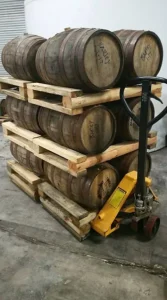
Barrels
snaps, century-old rickhouses. And Kentucky bourbon is great — nobody is arguing otherwise.
But here’s what most people don’t realize: the things that make Kentucky whiskey taste the way it does are environmental. The water. The climate. The seasons. Change the environment and you change the spirit — fundamentally, not just slightly.
At Timber Creek Distillery, we’re not trying to make Kentucky bourbon in Florida. We’re making Florida whiskey. And the difference starts long before a drop goes into a barrel.
The Water Runs 285 Feet Deep
Water is the largest single ingredient in any spirit. It’s used throughout fermentation, dilution, and proofing — and the chemistry of that water shapes everything that comes after it.
Timber Creek doesn’t use municipal water. Every drop comes from a private well drilled 285 feet into the limestone spring aquifer beneath our property in the Florida Panhandle. That water is pumped straight from the ground and used as-is — no treatment, no filtration, no additives.
Limestone-filtered water is naturally low in iron and high in calcium and magnesium — the same mineral profile that made Kentucky famous for bourbon production. The geology is different, but the principle is the same: water moving slowly through limestone picks up minerals that support fermentation and soften the final spirit.
The consistency matters too. Unlike surface water that changes with rainfall and seasons, aquifer water stays stable — same mineral content, same temperature, same chemistry batch after batch.
The Heat Does Work That Kentucky Winter Can’t
Barrel aging is a conversation between the spirit and the wood. Heat drives liquid into the charred oak. Cooling pulls it back out, now carrying color, tannins, vanilla, caramel, and the compounds that turn raw distillate into whiskey worth drinking.
In Kentucky, that conversation pauses every winter. Whiskey stops actively aging below around 40°F, and Kentucky winters regularly drop well below that. The barrels go quiet for months at a time.
In the Florida Panhandle, that almost never happens. Our winters are mild. Our summers are long and genuinely hot. The barrels stay active year-round, driving consistent wood interaction through every season — not just the warm ones.
Florida whiskey develops deep character on its own timeline — not faster or slower than Kentucky, just differently. The result is a spirit with its own distinct personality rather than a southern imitation of something made a thousand miles north.
Our rickhouses run entirely on solar power. No artificial heating or cooling — the Florida climate does the work naturally.
The Grain Grows Here
Terroir is a wine concept, but it applies to grain too. Three of the four grains we use at Timber Creek come from regional farms right here in the Florida Panhandle.
North Florida Red Soft Winter Wheat — The heart of our vodka and the soft backbone of our wheat bourbon. Clean, slightly sweet, and distinctly regional.
Florida Black Rye — A distinctive local variety that drives the spice and structure in our rye whiskey. Bold and earthy in a way that sets it apart from rye used in most American whiskeys.
Local Corn — The foundation of our bourbon-style expressions. Sourced from regional growers, it brings the sweetness and body that corn is known for.
Barley is the one exception — we haven’t been able to source it locally at the quality and consistency we need, so it comes from outside the region. But the three grains that form the core of most of what we make are genuinely Florida grown, and that shows up in the glass.
What It All Means in the Glass
Pull it all together and here’s what you actually taste: limestone-filtered water supporting clean fermentation, year-round heat driving active barrel maturation, and locally grown grain bringing a regional character that can’t be replicated anywhere else.
Timber Creek whiskey doesn’t taste like Kentucky bourbon. It’s not supposed to. It tastes like the Florida Panhandle — the soil, the aquifer, the long humid summers, the local farms. That’s not a compromise. That’s the whole point.
The best way to understand it isn’t to read about it — it’s to taste it. Our Bourbon Blending Experience lets you taste each grain individually and then blend them into something entirely your own. That’s the clearest demonstration we know of why Florida whiskey is worth paying attention to.
Book a distillery tour or reserve a Bourbon Blending Experience and taste the difference yourself.